Introduction
In Bela Krajina most of the water flows under the ground. so there are
not many rivers. However the Lahinja nature park is rich with water.
Carst sources are inhabited with few but various animal species,
due to relatively constant conditions. The locals appreciated every source
of water, so many of them are accessible.
 Warm springs
are present at local faults and riverbeds. The temperature of their water
is about 18-19°C. One of the larger ones is the Topličica..
Warm springs
are present at local faults and riverbeds. The temperature of their water
is about 18-19°C. One of the larger ones is the Topličica..
The Lahinja has springs under the village Knežina. In the beginning
the riverbed is shalow and meandering. The river is the living space for
many plant and animal species. Among fish most often carps (and similar)
can be found.
 The Nerajčica is the first larger tributary of the Lahinja and rises
from the spring Okno.
The Nerajčica is the first larger tributary of the Lahinja and rises
from the spring Okno.
Carst features
Among the carst features in the Lahinja nature park the caves Pečina,
Pečina (at the mill), Djud and the sinkhole Glušenka are the most important.
The cave Pečina lays at the river and is flooded, so diving
equipment is required to explore it. A story tells that the devil
hid the bell of the nearby church in there. About 100 m lower another cave
can be found, Pečina at the mill
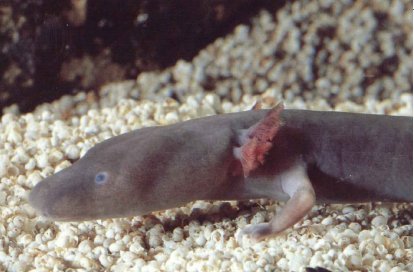 The
cave Djud is the only real "cave" in the nature park. It is also known
as Džut, Zjot or Zjut, althoug many other caves in Bela krajina are also
called zjut or džut. These caves have a wide (zjot) entrance. Djud is a
typical water-cave.
The
cave Djud is the only real "cave" in the nature park. It is also known
as Džut, Zjot or Zjut, althoug many other caves in Bela krajina are also
called zjut or džut. These caves have a wide (zjot) entrance. Djud is a
typical water-cave.
When visiting the cave one must first crawl throug a narrow tunnel.
The main part of the cave is an underground hall. The hall ends in a new
tunnel which brings one to a shaft completly filled with water. With the
appropriate equipment it is possible to travel 12 further meters until
the tunnel ends.
Close to the cave Djud one can find the sinkhole Glušenka..
At the bottom there is some water in which one can even find fish.
Marshes
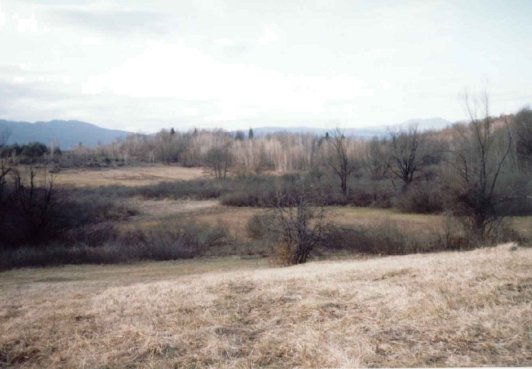 Swamps are a speciality of the Lahinja nature park.
The marsh of Lahinjske luge originates under the spring of the
Lahinja. Its bottom is completely marshy.
Nerajske luge are located under the confluence of the Lahinja
and the Nerajčica.
 In Luge (larger marshareas) we find bent-grass, reeds, fern and dog-rose.
Mlaka is a marshy living space. The marsh plants that grow here
are a paradise for many animal species. One can find frogs, toads and perhaps
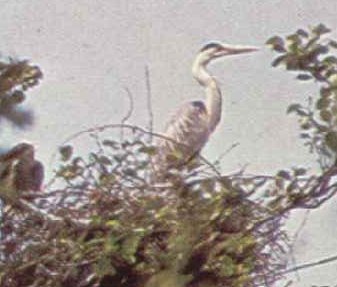
even tortoises. Many birds live in the Lahinja nature park. Among them
herron, nightingale, kingfisher and wagtail.