|
|
Painting Project
07.
12. 2007 - 10. 01. 2008
Ganes Pratt, Ljubljana
group
exhibition (together with Viktor Bernik, Janez
Janša & Arjan Pregl)
"In
the new decade the works of Bernik, Janša,
Pregl and Vrabič have shown considerable changes.
The use of the previously existing images has
changed from being a key element of content
to being merely another possibility of abusing
the image and its presence in the contemporary
painting. The works of the four artists are
still linked to the painting from which they
all emerge, but they have started to understand
the picture in new ways. Within the frame of
the Painting project they put on show their
new works, which are closely connected to their
otherwise independent artistic practice. In
his projects Janša consistently deconstructs
the ideologies of painting and art. Pregl approaches
the question of painting in a similar manner;
however his deconstruction is more connected
to the inner ideologies of modernistic painting,
while Janša researches the operations of the
art system. Bernik understands the contemporary
picture in a different way, for he expands
his understanding of the spaces in the picture,
the social existence and the ways in which
the image can be depicted within them, with
the use of new media and the inclusion of the
spectator. Vrabič’s current project is a soft
deconstruction of the understanding of the
picture as a creation of a genius and leads
into the play between the painter and the pleasure
of creation, which is in its last step annulled
and changed into an event, predominantly due
to the participation of other artists. However,
in its concept Vrabič’s project links the practice
that understands the creation of a work of
art as a democratic process and the importance
of the collective, yet intimate pleasure of
creation."
Images of the process
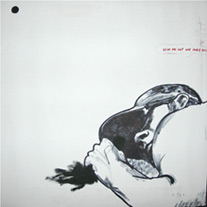
Sašo Vrabič
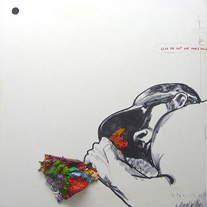
Sašo Vrabič,
Arjan Pregl
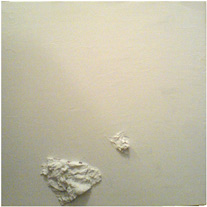
Sašo Vrabič,
Arjan Pregl,
Viktor Bernik
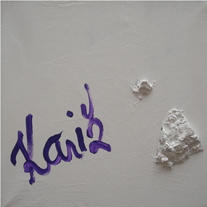
Sašo Vrabič,
Arjan Pregl,
Viktor Bernik,
Janez Janša
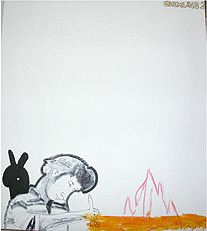
Sašo Vrabič
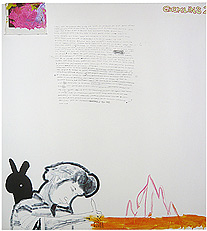
Sašo Vrabič,
Arjan Pregl
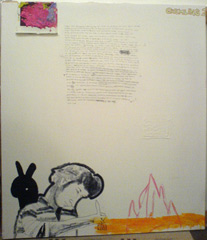
Sašo Vrabič,
Arjan Pregl,
Viktor Bernik
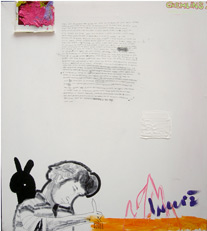
Sašo Vrabič,
Arjan Pregl,
Viktor Bernik,
Janez Janša
|
|

Sašo Vrabič, Arjan Pregl, Viktor
Bernik, Janez Janša, 2007
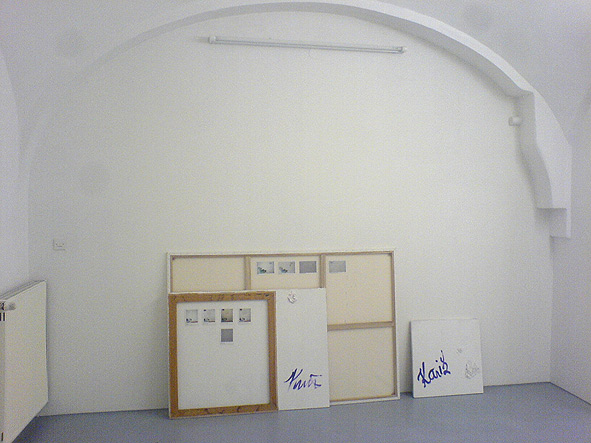
one of the installation view
more info at Gallery
Ganes Pratt
Catalogue
available
Excerpts
from catalogue
Painting Project
Text
by Petja Grafenauer Krnc
"Out of the four artists, Sašo Vrabič
is the only one who has at least partially
preserved the idea of a joint work on
a single surface. One can only speculate
whether the motivation for such a decision
was conditioned by Vrabič’s cooperation
within the project Bad Girls & Bad
Boys that was held in the Municipal Gallery
Ljubljana this spring. For this exhibition
the artists from the gallery prepared
an installation that was created without
the control of the curator.
Vrabič prepared four different sized canvasses,
partially painted them and then handed
them over to the other artists: ‘I toyed
with the idea that each one would get
his own canvass that he would enrich with
his mark, writing, sketch, painting, whatever
is currently on his mind. Due to the logistics
it would probably be the best if they
received all four canvasses at the same
time.’ Vrabič’s part of the project was
represented mainly by figural compositions
with a strong black drawing, limited to
a part of the canvass and equipped with
writing such as for instance Give me just
one more night or Every little thing she
does. Is magic. Magic. At least one of
the paintings was most probably made in
cooperation with his son Erik, with whom
he cooperated already at the preparation
of the exhibition in Žalec. Following
Vrabič’s intervention the paintings were
handed over to Pregl, who added attributes
to Vrabič’s figures – three dimensional
collages that were linked to his previous
painting cycles, for instance Oil on the
bible and our Tito and the series Damn
good female painters. Pregl also added
only small interventions thus giving space
to future interventions. When Bernik got
the paintings into his hands he intervened
radically and painted three of them with
white wall paint and added a small white
square on the fourth. This made the three
paintings empty, deleted, which could
also be linked to the project that the
author prepared for the Painting project.
Bernik’s radical gesture caused that the
painters as well as the spectators are
faced with a new question that deals with
the painter’s relation to his own work
of art. One of the paintings did not experience
a radical deletion. It is as if Bernik
wanted to allow for the possibility that
at least one work within the project develops
in accordance to Vrabič’s shared creativity
expectations, for which it seems that
the painters imagined in different ways.
The last
to get the paintings into his hands was
Janša, but he opted not to intervene in
the works and decided that his only addition
will be to pass the paintings to his family
so that they can sign them. Janša’s gesture
is connected to the project Policy of
the painting, which the artist also exhibits
at the exhibition (as an individual project).
One of the levels of both Janša’s interventions
is the questioning of the importance of
the artist’s signature on the painting
– an element that in fact gives the painting
its cultural and market value, for it
is important who signs the painting. The
signature on the painting denotes the
authorship, for it defines the painting
with a signature that tells everybody
that this is an original hand made work.
The fact that Janša opted not to sign
the paintings, or rather that he passed
them on to his family so they could sign
them, is additionally complicated with
the change of his name and surname. Kariž
is a surname which should ensure that
the work of art was painted by a painter,
for his previous works and their placement
into the world of art ensure value also
for his future works. However Žiga Kariž
no longer exists. Today this artist is
called Janez Janša. What is more important
– who signs or what is signed? And what
does it mean when a painting understood
by Vrabič as a democratic process is now
marked with a single signature. If Vrabič
understood the canvasses as a sketchbook,
Pregl brought into them the reminiscences
of his previous work, Bernik emptied them
so that they became a field for questioning
the ideology of painting that could be
then used by Janša.
Within the gallery Vrabič leaned the paintings
against the wall and thus negated the
typical placement of the painting as a
window in the wall at the height of the
spectator’s eyes. He exhibited the project
as an archive which the visitor can use.
The work phases are shown on photographs
(that include the name of the artist of
the individual phase) stuck to the backs
of the paintings and evoking questions
as regards the importance of the idea
in relation to the direct surface, i.e.
the painting. The spectator can move the
paintings and view them from all sides.
In Vrabič’s project we also stumble across
the question as regards the title of the
paintings. An exhibited painting is usually
equipped with the artist’s name, title,
technique and year of origin. Vrabič’s
project is equipped only with the following
information: Sašo Vrabič, Arjan Pregl,
Viktor Bernik, Janez Janša, 2007. It is
not clear whether the four names mark
the authors of the painting or is this
the title. The names are in the same order
in which the painters received the canvasses
and most probably represent the title
as well as the name of the authors. Vrabič
thus fails to accept the authorship of
the project that he came up with the idea
for and divides the authorship amongst
the four participants."
Sašo Vrabič, Arjan Pregl, Viktor Bernik,
Janez Janša, 2007
one of the installation view
more info at Gallery
Ganes Pratt
<Text
in Slovenian>
Odlomek
iz kataloga Slikarski projekt
Besedilo:
Petja Grafenauer Krnc
"Sašo Vrabič je izmed vseh umetnikov
edini, ki je delno ohranil prvotno idejo
skupnega dela na eni površini. Le špekulirati
je mogoče, ali je bil motiv za tako odločitev
pogojen z Vrabičevim sodelovanjem v okviru
skupinskega projekta Bad Girls & Bad
Boys pomladi letos v Mestni galeriji Ljubljana,
kjer so umetniki galerije pripravili projekt,
veliko instalacijo, ki so jo ustvarili
v medsebojnem sodelovanju in brez nadzora
kuratorja.
Vrabič je pripravil platna štirih različnih
dimenzij, jih najprej delno poslikal sam
in jih nato predal drugim slikarjem: »Razmišljal
sem, da bi vsak dobil svoje platno, ki
bi ga obogatil s svojo potezo, zapiskom,
skico, sliko, karkoli že razmišlja o slikarstvu,
umetnosti, življenju trenutno. Zaradi
logistike bi morda bilo najboljše, če
bi vsa štiri platna dobili naenkrat.«
Vrabičev del projekta so predstavljale
večinoma figuralne kompozicije z močno
črno risbo, omejene le na del platna in
opremljene z napisi, npr. Give me just
one more night ali Every little thing
she does. Is magic. Magic. Vsaj ena izmed
slik je verjetno nastala v sodelovanju
s sinom Erikom, s katerim je Vrabič že
sodeloval pri pripravi razstave v galeriji
v Žalcu. Po Vrabičevi intervenciji je
slike prevzel Pregl, ki je Vrabičevim
figuram večinoma dodajal atribute – tridimenzionalne
kolaže, ki so se nanašali na njegove prejšnje
slikarske cikle, npr. Olje na Biblijo
in Našega Tita in serijo Prekleto dobre
ženske slikarke. Tudi Pregl je v slike
dodajal le majhne intervencije in dopuščal
prostor za naslednje posege. Ko se je
slik lotil Bernik, je vanje posegel radikalno
in tri izmed njih preslikal z belo stensko
barvo, na eno pa dodal le majhen kvadrat
bele barve. Tri izmed slik so tako postale
prazne, izbrisane, kar je mogoče povezati
tudi s projektom, ki ga je za Slikarski
projekt pripravil umetnik sam. Bernikova
radikalna gesta je povzročila, da je tako
samim slikarjem, kakor tudi publiki, zastavljeno
novo vprašanje, ki se tiče slikarjevega
odnosa do lastne umetnine. Ena izmed slik
ni doživela radikalnega izbrisa. Kakor
da je Bernik vendarle želel dopustiti
možnost, da se vsaj v enem delu projekt
razvija v skladu z Vrabičevimi predvidevanji
o skupinski ustvarjalnosti, za katero
se zdi, da so si jo slikarji predstavljali
na različne načine.
Zadnji je slike v obdelavo prejel Janša,
ki pa se je lastnemu slikarskemu posegu
v delo odrekel in avtorstvo prevzel zgolj
v odločitvi, da je slike ponudil v podpis
lastni družini. Janševa gesta je povezana
s projektom Politika slike, ki ga umetnik
na razstavi predstavlja samostojno. Ena
od ravni obeh Kariževih intervencij je
preizpraševanje pomena umetnikovega podpisa
v sliki – elementa, ki sliki pravzaprav
določi kulturno in tržno vrednost, saj
ni vseeno, kdo se podpiše na sliko. Podpis
na sliki zaznamuje avtorstvo, sliko določi
z napisom, ki vsem in vsakomur pripoveduje
in zatrjuje, da je ročno delo nekega umetnika.
Dejstvo, da se je Janša podpisu odrekel,
oziroma podpisovanje prepustil svoji družini,
je še dodatno zapleteno s spremembo njegovega
osebnega imena. Kariž je priimek, ki naj
bi bil zagotovilo, da je umetniško delo
naslikal slikar, saj njegova pretekla
dela in umestitev v svet umetnosti zagotavljajo
vrednost za nadaljnja dela. Toda Žiga
Kariž ne obstaja več. Umetnik se danes
imenuje Janez Janša. Je bolj pomembno
kdo piše ali kaj piše? In kaj pomeni dejstvo,
da je slika, ki jo je Vrabič razumel kot
demokratični proces podajanja slikarskega
platna, zdaj zaznamovana z le enim podpisom.
Če je Vrabič platna razumel kot skicirko
in je Pregl vanje vnesel reminiscence
na svoje prejšnje delo, je Bernik izpraznil
sliko, da je ta postala polje za vprašanje
ideologije slikarstva, ki ga je izrabil
Janša.
V prostoru galerije je Vrabič slike prislonil
na steno in zanikal tipično postavitev
slike kot izreza – okna v steni na višini
gledalčevega pogleda. Projekt je razstavil
kot arhiv, ki ga obiskovalec lahko uporablja.
Faze dela so s pomočjo fotografij s pripisanim
imenom avtorja določene faze, razkrite
na hrbtni strani platen in evocirajo vprašanja
o pomembnosti idejnih izhodišč v razmerju
do direktne površine, slike same. Gledalec
lahko slike premika in ogleduje z vseh
strani.
Ob Vrabičevem projektu se vzpostavlja
tudi vprašanje o naslovu slik. Razstavljena
slika je navadno opremljena z avtorjevim
imenom, naslovom, tehniko in letnico.
Vrabičev projekt je opremljen zgolj s
sledečimi podatki: Sašo Vrabič, Arjan
Pregl, Viktor Bernik, Janez Janša, 2007.
Ni jasno ali zaporedje štirih imen označuje
kdo so avtorji slike ali pa gre za naslov
dela. Zaporedje imen je identično zaporedju,
v katerem so slikarji slikali slike in
je verjetno hkrati naslov in zaznamek
o avtorstvu. Vrabič se tako odreka avtorstvu
nad projektom, ki ga je konceptualno zasnoval
in avtorstvo razpne nad vse štiri sodelujoče."
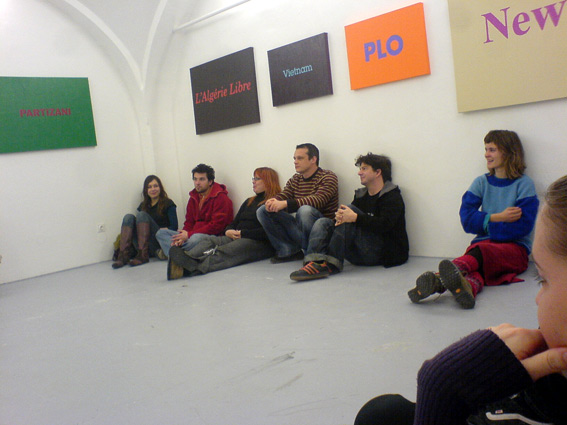
21.12.2007
- Paintng project talk with students,
Alen Ožbold & Gustav Gnamuš in Ganes
Pratt
(behind: works by Janez Janša)

Sašo Vrabič, Arjan Pregl, Viktor Bernik,
Janez Janša, 2007
one of the installation view
more info at Gallery
Ganes Pratt
|
|
