IMPACT ON ANIMALS
HOME
ABOUT PROJECT
GOALS
WHAT IS THIS "LIGHT
POLLUTION"?
REGISTRATION
COOPERATORS
ACTIVITIES
CONTRIBUTIONS
FUNNY
GALLERY
CONNECTONS
RESEARCH TASK
HOME SCHOOL
IImpact
of outdoor lighting on insects
Light pollution doesn't only impede astronomical observations but also
threatens some animals. Streetlighting is quickly spreading into the
countryside and to natural resorts of animals.. This has a strong impact on
the life cycle of insects, who are an animal group with the largest number
of types and thus contribute the largest share to the biotic diversity on
our planet. Two institutions in Slovenia, Bird Watching and Bird Study
Association of Slovenia and Slovenian Museum of Natural History have
appealed to the public this year to reduce light pollution.
So as all living creatures insects are also influenced by inner and outer
factors:
- inner (food and mating)
- outer (temperature, moisture, gravity and light, which is
the most important outer factor)
The majority of insects have a good
eye-sight. There are several ways of protecting insects from light
pollution:
- full closed light
- use non-UV lights and automatic switch-off lights
- ban the emission of light over lamp's horizontal line after
10pm to reduce luminosity
How do insects react to light?
Some types of insects flee away
from light and we say that they are phototactic negative. Others always turn
towards it because they are attracted to it, so they are phototactic
positive.
What do insects see?
Insect eye sensitivity goes far into the ultraviolet light spectrum
invisible to man - to 300nm (nanometre) or still farther.
How do insects orientate themseles?
Insects orientate themselves by picturing a light source and directing it on
the same ommatidia in a compound eye. So when they move they can keep the
same angle towards the sun or other celestial body all the time. This is
the so-called compass orientation. Their sense for time is also important.
/biological clock). The rotation of earth causes virtual moving of celestial
bodies. Insects must monitor the angle of flying constantly if they want to
fly in line.
Impact of artificial light sources on insects
During migration insects fly at the same angle towards the sun and other stars. They retain this angle when disturbed by an artificial light source. They are particularly attracted to UV light. They approach the light source spiralling and finally crash into it. They are so often attracted to light because they are phototactic positive. To prevent this we should use full cut-off lights.
Night butterflies
Night butterflies balance
feeding, reproduction and flying with the quantity of light. They start
their night cycle with feeding. They contribute an important share to the
pollination of plants. They are the second most important pollinators
after bees. Their reproduction is also important.
Night butterflies with longer life
expectancy go on long migrations. They spend winter in the Mediterranean and
fly back to central Europe in spring. Butterflies' time and orientation
depend on the Moon and other celestial bodies, which enables them to be at
the right place at the right
time.
A number of surveys in Germany showed that the whole populations of
different species had disappeared. We can avoid this with the use of
appropriate lights and casings. The most attractive and thus lethal for
insects are high-pressure mercury light bulbs. Unfortunately the majority
of roads, parking areas and others public areas are illuminated with these
lights. Fluorescent tubes radiate light too, but kill three times fewer
insects than mercury lights.
The most suitable are low-pressure sodium lights, which are rarely used.
The form is also important. Globe lamps are the worst possibility because
butterflies mix them with the Moon. The best choice is box lamp casing, with
flat protection cover, without side openings.
Impact of light pollution on birds
Light pollution also influences birds. There are 9600 types of birds in the
world, 1111 of which are threatened. In the last 200 years 74 types of birds
have become extinct. Further 130 are on the red list, 15 of them have
already become extinct. During March-May and September-November periods
migratory birds are on the move and thus are influenced by light pollution
the most.
Examples:
A LITTLE OWL (Athene noctua ) -
50% of its food are insects. If the number of insects doesn't stop falling
there will be less food for them. These birds often (perhaps also because
of hunger?) move to urban areas and meadows and become frequent victims of
traffic.
A SCOOPS-OWL ( Otus scops ) – it also eats insects
A ROLLER (Coracias garulus) – not more than 3 decades ago it was quite common in Štajerska and Prekmurje valleys, groves and vineyards. Now there are only 4 couples left in remote areas of Slovenske gorice and Celje hills. The solution is the re-introduction of traditional forms of agriculture. It's just the question of time when it will become extinct because there in not enough food.
A RED-NECKED GREBE (Podiceps grisegena) AND A BLACK-THROATED DIVER (Gavia arctica) - These types of birds land on water. They mistakenly take incorrectly illuminated surfaces of roads and airport runways for water surfaces and thus try to land, breaking their wings, legs and die.
Bird Watching And Bird Study Association of Slovenia conference already suggested actions against light pollution in 2000. They proposed switching off advertising light after 11pm, full cutoff lights and the prohibition of high-pressure mercury lights. This doesn' t mean that all the lights should be switched off. This just means a better control of their emission into our environment. Natural environment in urban areas and around astronomical observatories should be equally protected.
Translation or lecturetion: Janja Anzicek

We keep planet.
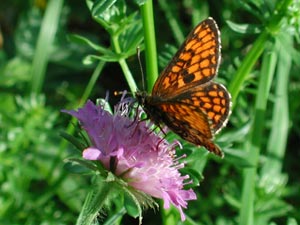
Garden butterflie.
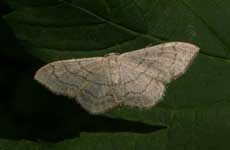
Night butterflie.
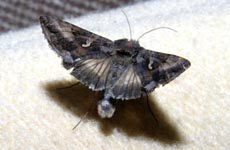
Night butterflie.
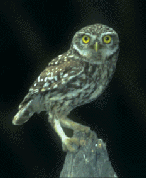
Little owl.
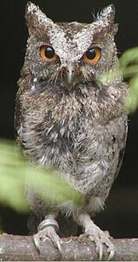
Sparrow owl.