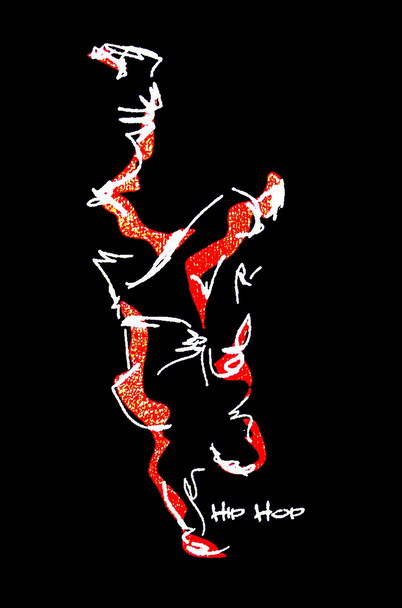


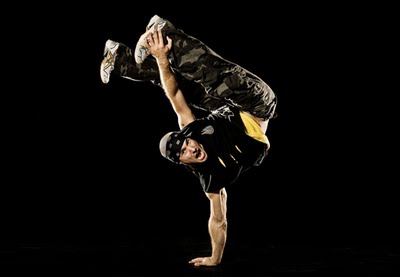
According to the influential graffiti artist Mare, documentation has been discovered tracing the origins of Breaking back to 19th century into 20th century Russia. Breaking, also called B-boying or breakdancing, is a dynamic style of dance which developed as part of the hip hop culture. In the early 1930s a man named Earl Tucker invented a type of dancing called Snakehips, a dance involving one moving their hips in a fashion intended to look like the person had no skeleton. In an article written by Kennedy Center Earl Tucker earned the nickname “Human Boa Constrictor”. Breaking began to take form in the South Bronx alongside the other elements of hip hop. The "B" in B-boy stands for break, as in break-boy (or girl). The term "B-boy" originated from the dancers at DJ Kool Herc's parties, who saved their best dance moves for the break section of the song, getting in front of the audience to dance in a distinctive, frenetic style. A popular move is called the Headspin a move in which a person holds their entire body weight on their head. And using only the head to propel the whole body around in circles. According to the documentary film The Freshest Kids: A History of the B-Boy, DJ Kool Herc describes the "B" in B-boy as short for breaking which at the time was slang for "going off", also one of the original names for the dance. However, early on the dance was known as the "boing" (the sound a spring makes). In 1980s b-boys wore Adidas tracksuits and take-out their pants pocket which means they breaking to make money on the street and to represent the foundation of oldskool hip hop. Breaking was briefly documented for release to a world wide audience for the first time in Style Wars, and was later given a little more focus in the fictional film Beat Street. Early acts include the Rock Steady Crew and New York City Breakers.
B-boying is one of the major elements of hip hop culture, commonly associated with, but distinct from, "popping", "locking", "hitting", "ticking", "boogaloo", and other funk styles that evolved independently during the late 1960s in California.[67] It was common during the 1980s to see a group of people with a radio on a playground, basketball court, or sidewalk performing a B-boy show for a large audience.
It is a common misconception that falling during a dance sequence is necessarily accidental and unprofessional; b-boys occasionally add falls to their dance routines to convey a sense of spontaneity. This is particularly true in the U.S.
 |