. If you click it, it will show you the
exact position on a map of Slovenia.
. If you click it, it will show you the
exact position on a map of Slovenia.Of course there are many more remains. I intend to photograph them all and put them in this gallery.
Photo gallery:
Along river Soca (It.: Isonzo) are many remains of a bloody war that reminds us what
was happening here in the beginning of 20th century. Here are some photos, which I took
when I went exploring the front. Click on the picture to enlarge it. Sometimes it is hard
to find these places so I added red dots like this: . If you click it, it will show you the
exact position on a map of Slovenia.
Of course there are many more remains. I intend to photograph them all and put them in
this gallery.
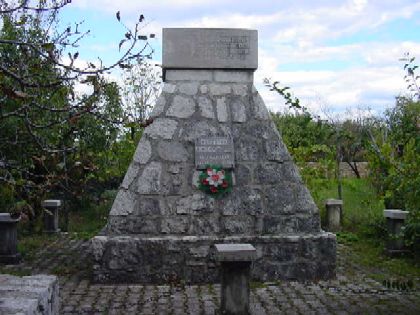 new! Austro-Hungarian monument in the village Vojscica. new! Austro-Hungarian monument in the village Vojscica. |
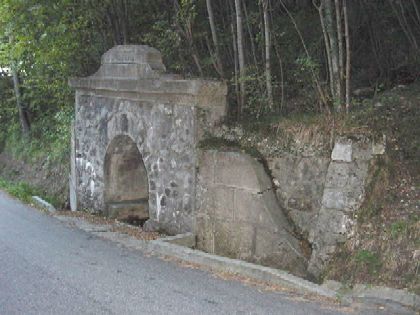 new! Austro-Hungarian water fountain on the road
Krobmerk - Ravnica. new! Austro-Hungarian water fountain on the road
Krobmerk - Ravnica. |
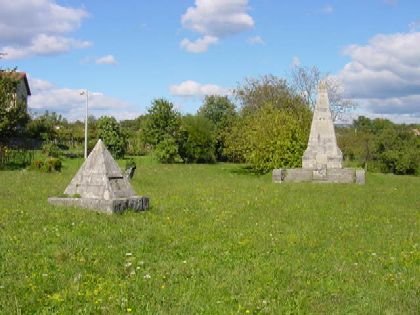 new! Austro-Hungarian cemetery in the village Sveto. new! Austro-Hungarian cemetery in the village Sveto. |
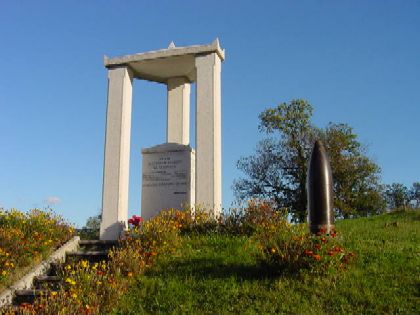 new! The new monument erected in the
memory of the slovenian soldiers in the Austro-Hungarian
army. new! The new monument erected in the
memory of the slovenian soldiers in the Austro-Hungarian
army. |
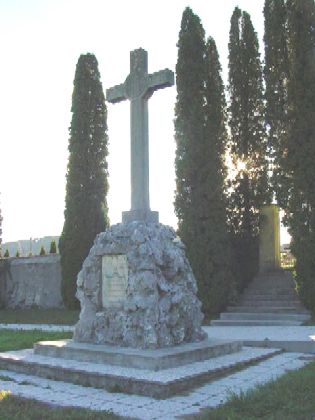 new! Austro-Hungarian cemetery Ravnica. new! Austro-Hungarian cemetery Ravnica. |
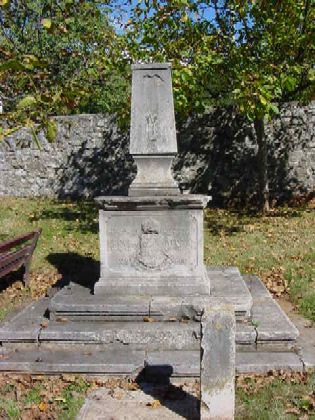 new! Austro-Hungarian monument in the village Klanec pri
Komnu. new! Austro-Hungarian monument in the village Klanec pri
Komnu. |
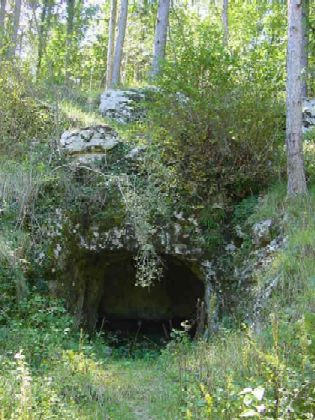 new!Entrance in the Austro-Hungarian cavern at the village Brje pri Komnu
na Krasu. new!Entrance in the Austro-Hungarian cavern at the village Brje pri Komnu
na Krasu. |
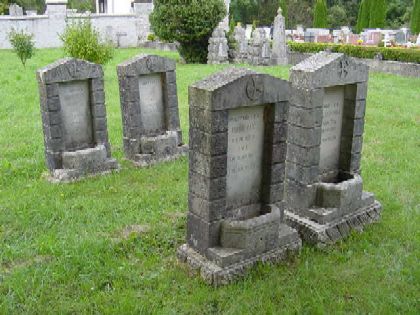 new! Austro-Hungarian cemetery Grgar. new! Austro-Hungarian cemetery Grgar. |
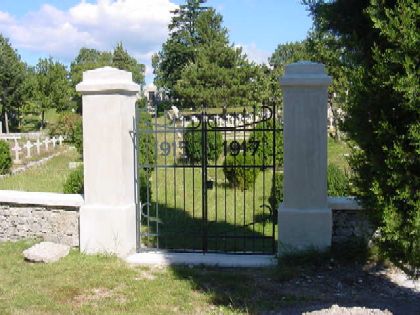 new! Biggest Austro-Hungarian cemetery in Slovenia at the village Gorjansko new! Biggest Austro-Hungarian cemetery in Slovenia at the village Gorjansko |
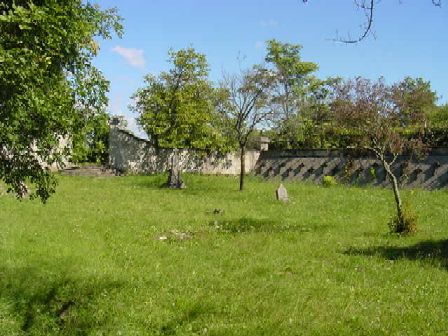 new! Austro-Hungarian cemetery Brje pri Komnu. new! Austro-Hungarian cemetery Brje pri Komnu. |
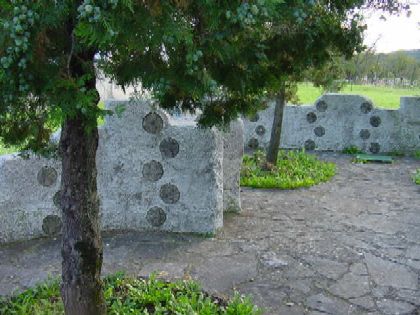 new! Austro-Hungarian cemetery Bate. new! Austro-Hungarian cemetery Bate. |
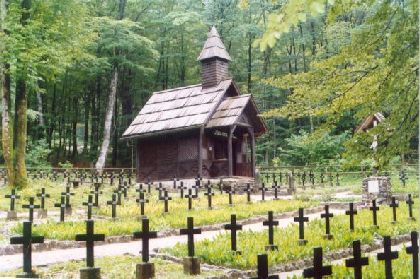 Austro-Hungarian
cemetery in the village Ukanc, near ski centre Vogel. There are many monuments of
atrocious war even far away from the frontlines. Austro-Hungarian
cemetery in the village Ukanc, near ski centre Vogel. There are many monuments of
atrocious war even far away from the frontlines. |
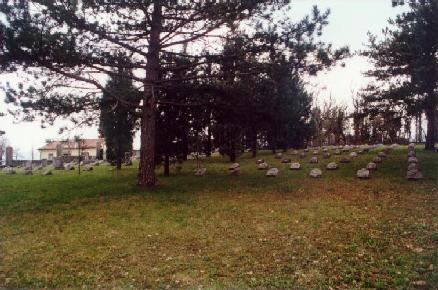 Austro-Hungarian
cemetery in the village Crnice is the largest military cemetery from W.W.I in Slovenia. Austro-Hungarian
cemetery in the village Crnice is the largest military cemetery from W.W.I in Slovenia. |
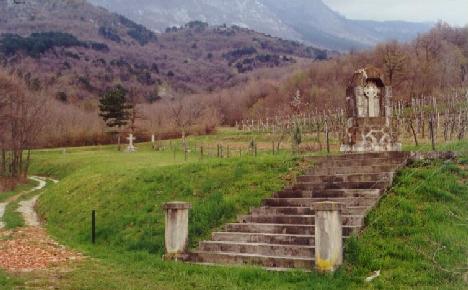 Austro-Hungarian
cemetery near Osek. During W.W.I there was a large military
hospital. Austro-Hungarian
cemetery near Osek. During W.W.I there was a large military
hospital. |
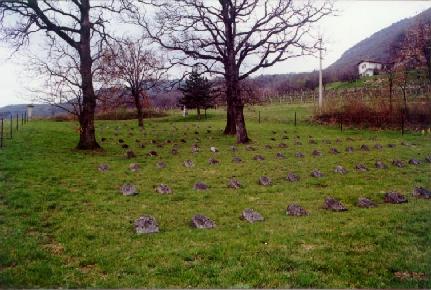 Austro-Hungarian
cemetery at Ajsevica. Austro-Hungarian
cemetery at Ajsevica. |
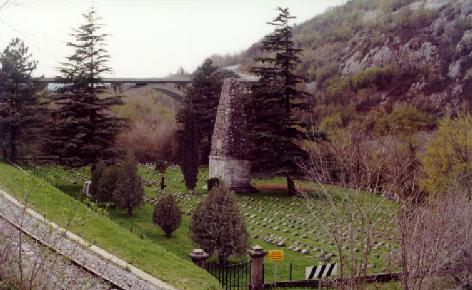 Austro-Hungarian
cemetery in Solkan. Austro-Hungarian
cemetery in Solkan. |
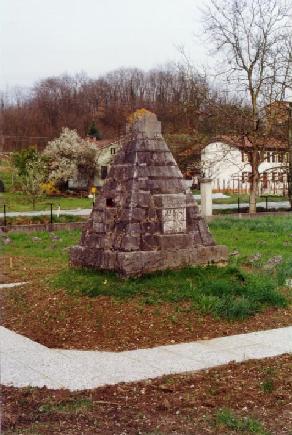 Austro-Hungarian
cemetery in Volcja Draga Austro-Hungarian
cemetery in Volcja Draga |
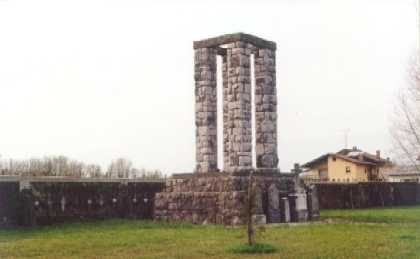 Austro-Hungarian
cemetery in Rence. Austro-Hungarian
cemetery in Rence. |
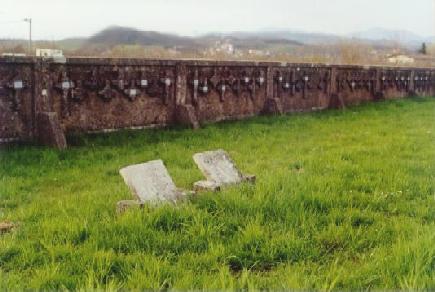 Austro-Hungarian
cemetery near Lukezici. Austro-Hungarian
cemetery near Lukezici. |
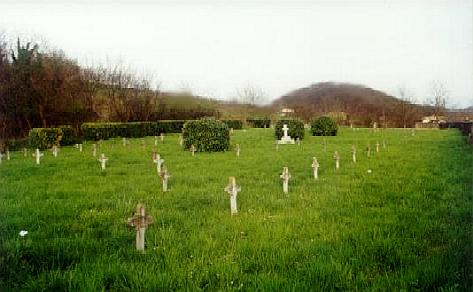 Austro-Hungarian
cemetery in Osevljek. Austro-Hungarian
cemetery in Osevljek. |
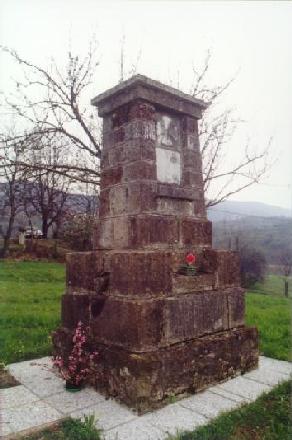 Austro-Hungarian
cemetery Zalosce I. Austro-Hungarian
cemetery Zalosce I. |
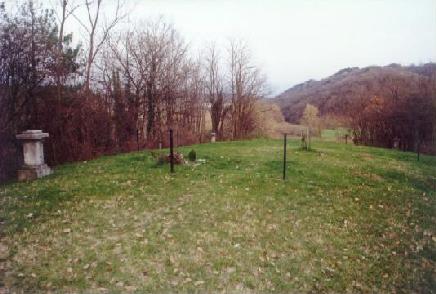 Austro-Hungarian
cemetery Zalosce II. Austro-Hungarian
cemetery Zalosce II. |
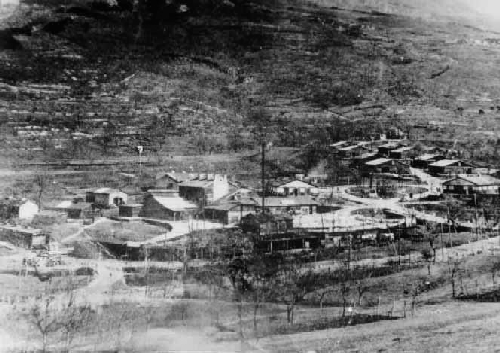
 Avce, little village near Most na Soci was totally destroyed in W.W.I.
Because of it's strategic position, many battles were going on here. In 11th battle for
Soca Italians focused the attack on the Banjsice highs and the bridging at Tolmin. During
the battle, Italians redirected attacks to mount Skabrijel at Gorica and Karst. Avce, little village near Most na Soci was totally destroyed in W.W.I.
Because of it's strategic position, many battles were going on here. In 11th battle for
Soca Italians focused the attack on the Banjsice highs and the bridging at Tolmin. During
the battle, Italians redirected attacks to mount Skabrijel at Gorica and Karst. |
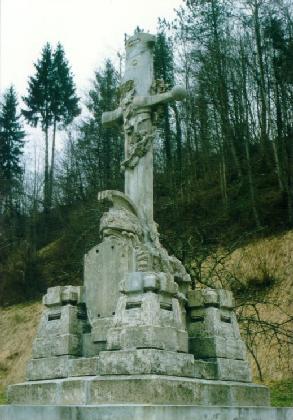
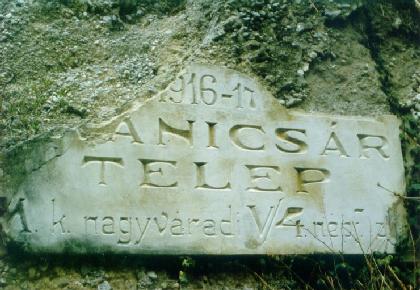 Near Avce is a monument erected during W.W.I. Most of the soldiers
here were from Hungarian part of the monarchy so the writing is in Hungarian. Commander of
this section was my great grandfather Johann Iskric. He was awarded with the knights cross of Maria Theresa order. You can read more about this
battle on the documents page. Near Avce is a monument erected during W.W.I. Most of the soldiers
here were from Hungarian part of the monarchy so the writing is in Hungarian. Commander of
this section was my great grandfather Johann Iskric. He was awarded with the knights cross of Maria Theresa order. You can read more about this
battle on the documents page. |
 In Avce is
an Italian cemetery too. But only the monument in the shape of a knife is preserved, the
soldiers bodies were moved to Oslavje. In Avce is
an Italian cemetery too. But only the monument in the shape of a knife is preserved, the
soldiers bodies were moved to Oslavje. |
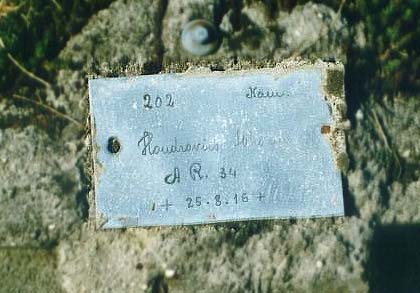 Near castle Rihemberk at the village Branik is a military cemetery. Today
there are only tomb crosses hanged to a wall. And it was here, where I discovered the true
meaning of those abstract numbers of casualties of war. Houdrovics Johann died on august
25th 1916. I was born on exactly the same day 63 years later. On this day I celebrate,
enjoy life, but than it was just another day with heavy casualties. And the worst thing
is, that everybody can find his birthday on some military cemetery. Even on more than one.
Victims became real. And we can never forget them. Near castle Rihemberk at the village Branik is a military cemetery. Today
there are only tomb crosses hanged to a wall. And it was here, where I discovered the true
meaning of those abstract numbers of casualties of war. Houdrovics Johann died on august
25th 1916. I was born on exactly the same day 63 years later. On this day I celebrate,
enjoy life, but than it was just another day with heavy casualties. And the worst thing
is, that everybody can find his birthday on some military cemetery. Even on more than one.
Victims became real. And we can never forget them. |
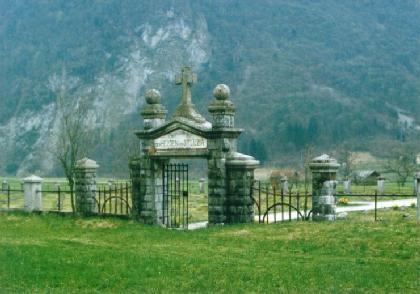 This Austro-Hungarian cemetery is near village Modrejce. On the portal
there is a sign: Ruhestätte / den HELDEN Von ST.LUZIJA (place of rest for the heroes of
St. Lucia). There are buried 2750 soldiers. This Austro-Hungarian cemetery is near village Modrejce. On the portal
there is a sign: Ruhestätte / den HELDEN Von ST.LUZIJA (place of rest for the heroes of
St. Lucia). There are buried 2750 soldiers. |
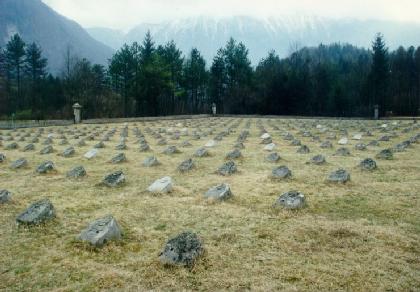 Cemetery at Bovec is divided in four sections. Tombstones are round and
preserved only in one section. Cemetery at Bovec is divided in four sections. Tombstones are round and
preserved only in one section. |
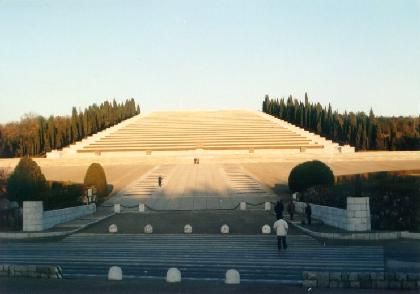 Endless stairs in the evening sun. The largest cemetery of Italian
soldiers Redipuglia (Sredopolje) at Polazzo (Polace), Italy. Endless stairs in the evening sun. The largest cemetery of Italian
soldiers Redipuglia (Sredopolje) at Polazzo (Polace), Italy. |
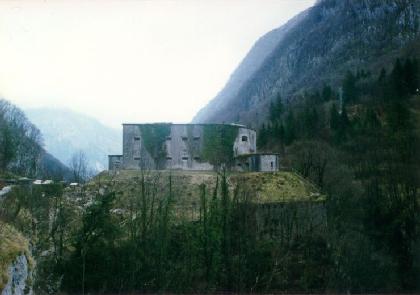 Great fort Kluze was built even before W.W.I. This bottom station
(Flitscher Klause) wasn't damaged in war, but the top (Werk Hermann) was totally
destroyed. Great fort Kluze was built even before W.W.I. This bottom station
(Flitscher Klause) wasn't damaged in war, but the top (Werk Hermann) was totally
destroyed. |
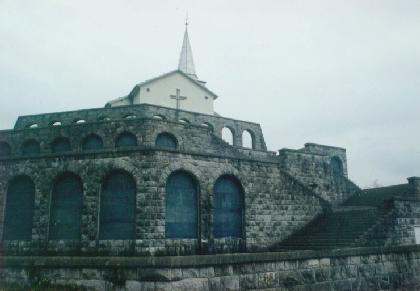 Cemetery in Kobarid was built between the WW. Benito Mussolini attended
the opening ceremony. Cemetery in Kobarid was built between the WW. Benito Mussolini attended
the opening ceremony. |
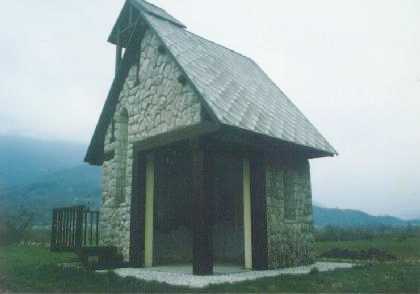 Beautiful Italian chapel at Ladra. Beautiful Italian chapel at Ladra. |
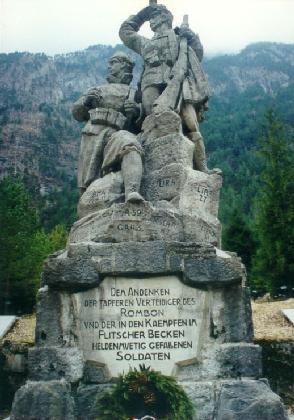 This monument at Log pod Mangartom is the only one on the territory of
Soska Front, on which there are signs in Slavic languages. Cemetery behind rises in
terraces. This monument at Log pod Mangartom is the only one on the territory of
Soska Front, on which there are signs in Slavic languages. Cemetery behind rises in
terraces. |
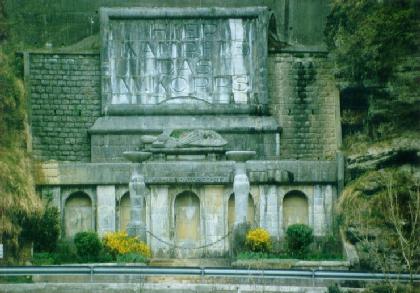 Great monument of the XV. corps of the Austro-Hungarian army at Baca pri
Modreju. Great monument of the XV. corps of the Austro-Hungarian army at Baca pri
Modreju. |
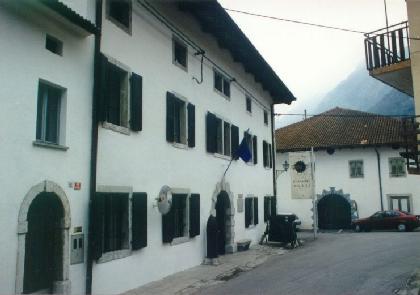 So nobody could forget the terrors of war. Museum Kobarid. So nobody could forget the terrors of war. Museum Kobarid. |
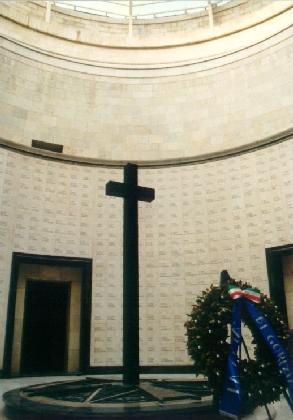 Inside of a monumental cemetery at Oslavia (Oslavje) above Gorizia
(Gorica). Inside of a monumental cemetery at Oslavia (Oslavje) above Gorizia
(Gorica). |
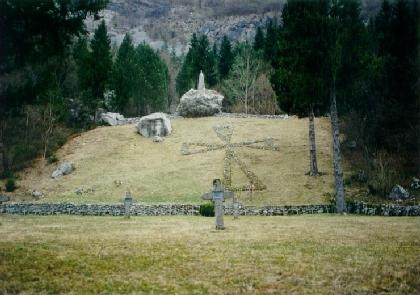 Cemetery in the village Soca. Cemetery in the village Soca. |
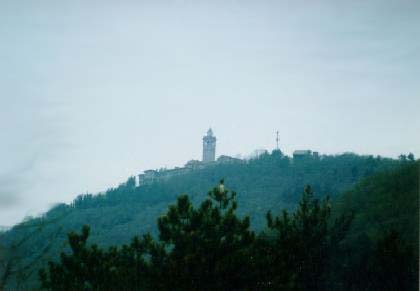 Sveta Gora above Nova Gorica was totally destroyed during the W.W.I
because of it's strategic position. After the war it was rebuilt and is now a sightseeing
point. Sveta Gora above Nova Gorica was totally destroyed during the W.W.I
because of it's strategic position. After the war it was rebuilt and is now a sightseeing
point. |