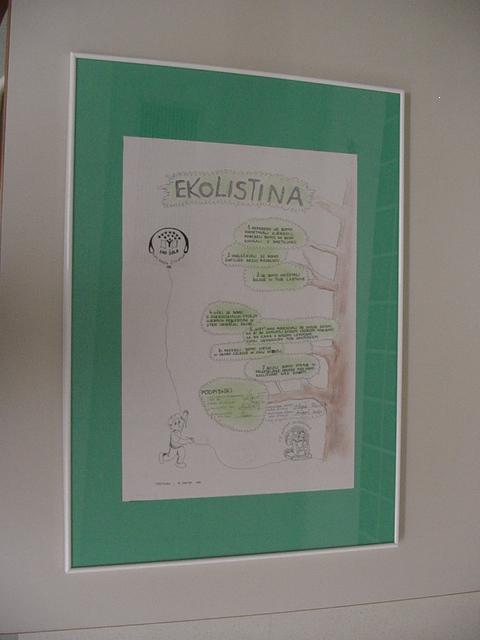
The ECO School program is based on seven steps. The purpose of the project is to create some new behavioural patterns regarding the environment for the individuals, school classes, entire school community and the town where it is located.
In the school year 2002/2003 we intend to follow and even expand our activities for the correct treatment of different waste materials and packaging, their further processing and recycling.
In spring time Mr Željko Šorc will instruct us how to choose the right place and how to prepare proper conditions for making compost, and with his help we will set the so called ''kompostnik''. He will supply us with containers for the separate gathering of packaging, dry and wet waste paper and hazardous waste materials as well as with the protective means for our safety. He will also take care of the separate removal of the waste material. In this way pupils will be better educated in the correct treatment of waste material and preservation of the environment. We intend to organise several courses of education at our school as well as directly on the dump.
This project includes all the pupils and teachers of our school as well as some representatives of the local institutions and the general sponsor of the ECO School – Publikus and its manager Mr Željko Šorc.
The contents of the program were confirmed by ECO school-board.
CONTENTS OF THE
PROGRAM:
1. NUTRITION
· care for cultural consuming
· care for the proper attitude towards food
· setting the table and preparing covers
· eating habits and fashion
· healthy diet
· EKO products
· production and processing of food
· alternative nutrition
· No chewing gums under the desks.
2. AIR
· pollution of the atmosphere
· warming of the atmosphere and the impact of the thermal bed
· the impact of the polluted air on weather
· the role of the individual – What
can I do?
· We will often ventilate our classrooms.
3. WATER
· meaning of water for life – water is valuable
· supply with the potable water
· types of water pollution and their consequences
· ways of cleaning of water
· economizing with water
· water supply on the Karst area
· Let's protect Karst
· meaning of the water cleaning installation – visit and tour
· proper attitude towards water
· waterworks
· sewage system
4. WASTE MATERIALS
· Where to deposit waste material?
· initiatives in cleaning our environment
· initiatives in collecting waste material (waste paper, plastic bottles..)
· constructing toys by using waste packaging
· economizing with paper towels and toilet paper
· gathering and data processing
· economical treatment with waste materials – sorting out and separate removal of waste materials
· composting
· There's a special stress on the unpolluted environment.
· economical use of packaging
· recycling
5. ENERGY
· saving energy (water, electricity..)
· types of energies
· economical use of energies
· We put out lights whenever we leave the classroom.
6. NATURAL AND CULTURAL HERITAGE
· ECO systems (forest, water, continents, sea..) – life, natural balance, natural wealth, impacts, planned economy, consequences of the incorrect treatment
· protection and preservation of the natural and cultural heritage
· We must take care for our hometown.
· We live healthier.
· clean environment (classrooms, corridors, cloakrooms, surroundings, supplementation of the exterior classroom, arranging the flower beds)
· proper behaviour in nature
· We have decided to live in cohabitation with nature.
· People are gradually changing environment (incorrect utilizing of nature, disastrous outcomes for humankind)
7. MUTUAL RELATIONS
· How do young people spend their
spare time?
· We need certain rules to live in the community.
· care for healthy and good relations between men and women
· We are all responsible for life in the community.
· struggle against smoking
· We are not careless about what is happening to other people across the globe (Amnesty International)
· I can help others – collecting initiatives, UNICEF workshops
· AIDS and addiction to drugs ( activities in connection with the Health center in Postojna)
· violence (Center for social work Postojna)
· examining the school atmosphere
· greetings
· I have done a good job.
8. OTHER
· We will take care of the proper use of the Slovene language.
· Green colour is our steering wheel.
The contents will be carried out according to the aims of the project not only during lessons and class hours but also during cultural, sport and natural science activities, in UNICEF workshops, social games and on several other occasions (The open doors day, The Earth day etc.).
_________________________________________________________________________________________________________________________
SEVEN STEPS
1. ECO DOCUMENT
2. INFORMING AND
CO-OPERATION WITH MEDIA
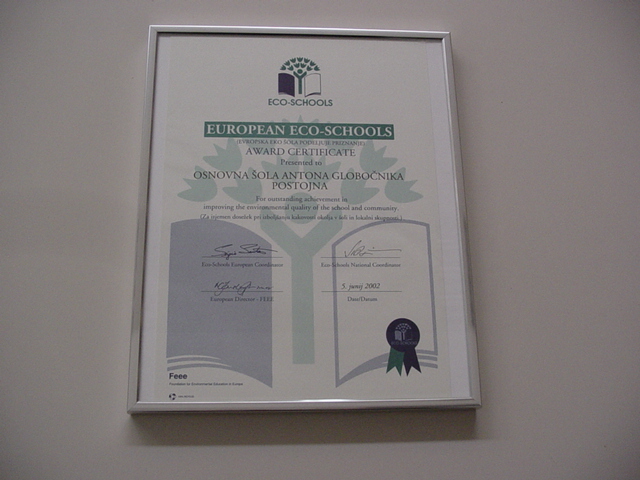
We intend to inform the local community and the local people about our efforts, problems and activities concerning the protection of the environment by means of the local media (Prestop, Radio 94).
3. THE ANALYSIS
OF THE SITUATION
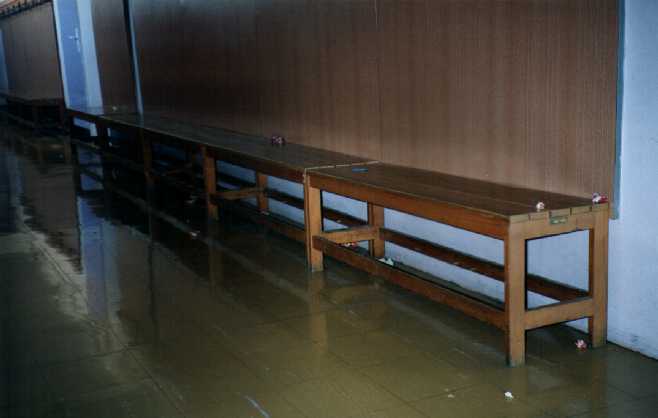
- Initial state
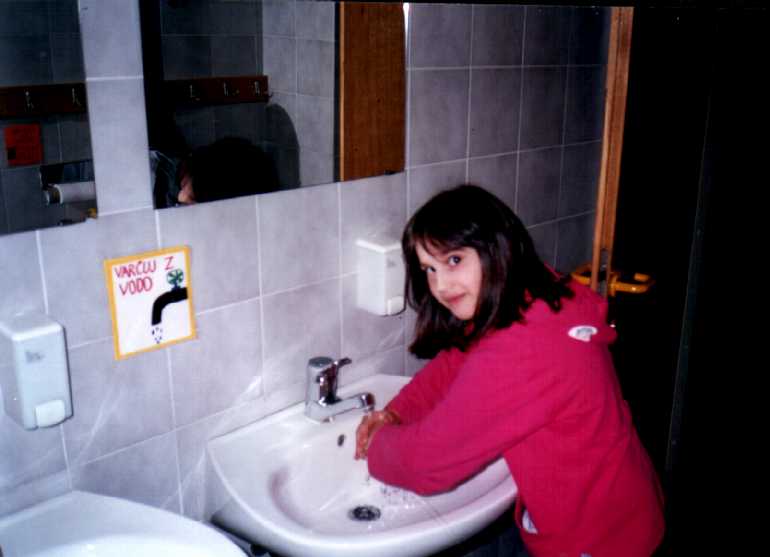
- We work differently now.
4. MONITORING AND
ASSESSMENT
ACTIVITIES:
· making compost
· paper making
· creating dustbins
· arranging flower beds and the surrounding
· other activities
a) MAKING COMPOST
What we can put on the composting heap:
Housekeeping:
· fruit and vegetable
· food (left-over)
· small quantities of rotten food
· eggshells
· dairy products (left-over)
· tea and coffee sediments
· hair
· died away indoor plants
· paper (paper napkins, handkerchiefs..)
From the garden:
· mowed grass
· weed
· leaves
· parts of trees, hedge, scrup (shred)
· remains of the flowers, stalks, vegetable
· rotten fruit
Things that don't belong to the composting heap:
· glass, metal, paper (pasteboards)
· liquids
· bones
· ash
· batteries
· chemicals, varnish, drugs,
· oils
· diapers
· content of the vacuum cleaners (danger because of the heavy metals)
SETTING UP THE
COMPOSTING HEAP
Instructions:
- correct setting up and construction of the heap (various sorts of waste materials)
- sufficient mixing
To assure good ventilation of the composting heap and to protect it from moistening we should first put 10 to 15 cm thick layer of shred wood and leaves on the composing area. By adding organic waste materials the heap grows slowly until the height of 90 to 120 cm. It should be equally high on all four sides and with a flat or arched top. We must protect it against rain by a projecting roof or cover it with jute bags. (Caution: We mustn't use plastic bags.)
Composting is processing of the organic waste material which doesn't harm the environment. The crossbars are made from recycled material. The assembling of the compost box is very simple because the crossbars are crosswisely connected into the firm construction. Composting will be more successful if the composting heap is protected from wind and direct sun.
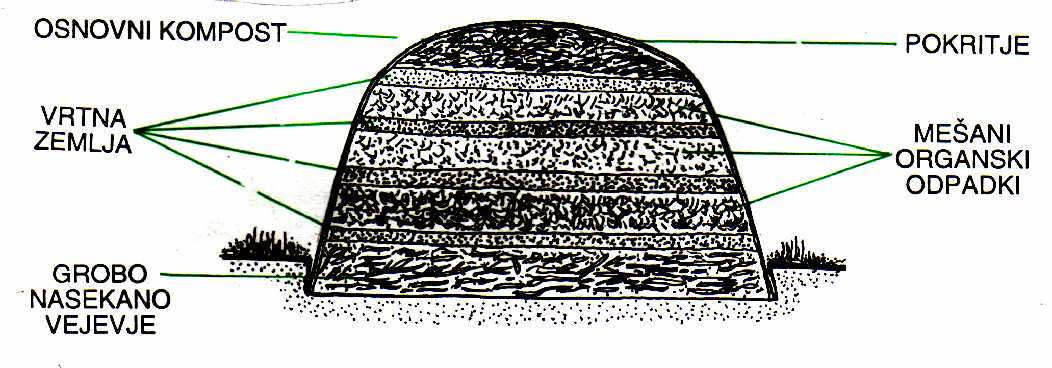
The first layer consists of twigs and leaves. For three months, we alternatively put on layers of organic waste material and layers of garden soil.

b) PAPER MAKING
We needed: some old paper, a kitchenware, a flowerpot, a nylon sock, two planks, some dust cloths and some foil.
1.Recycling is a serious job. We tore old paper into pieces.
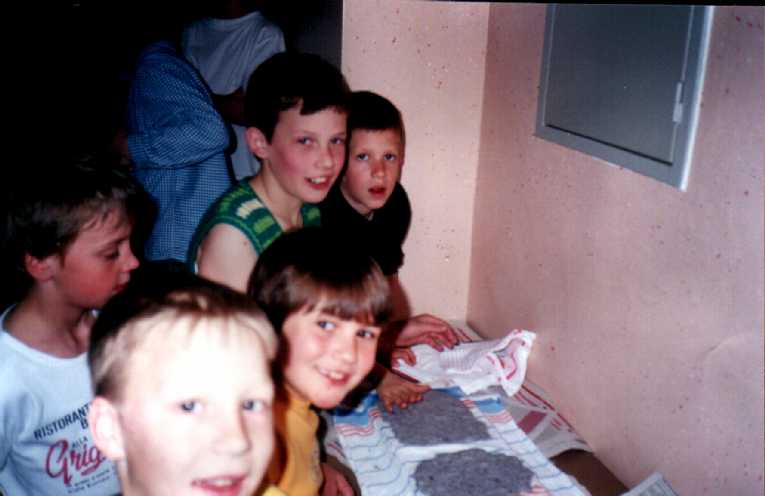
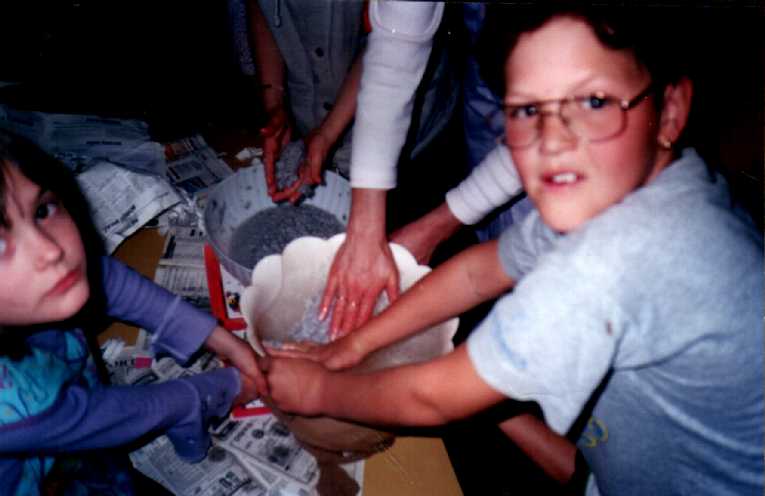
2. We put it into a kitchenware and poured some hot water. Then we mixed it well with our hands until it changed into thick pulp.
3. We placed an old nylon sock over the flowerpot and bounded it up with a string. Then we put some pulp on the sock, spread it on the surface and waited that it flowed off a bit.
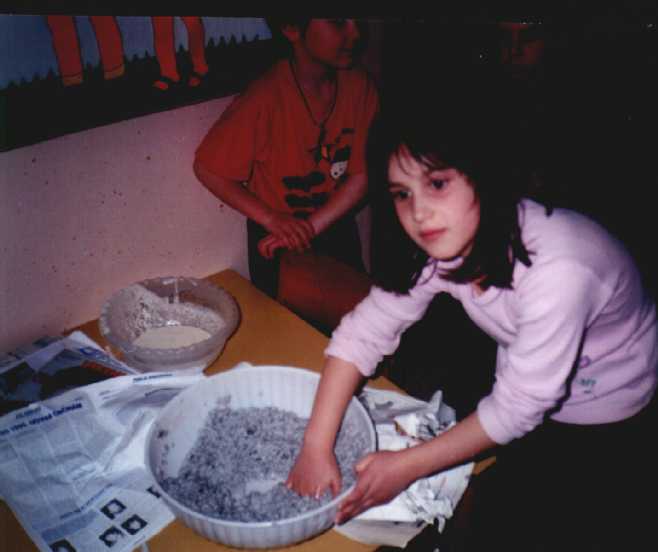
4.- 5. We prepared a plank and covered it with a dust cloth. Then we put the pulp on the dust cloth and covered it with another dust cloth and pushed.
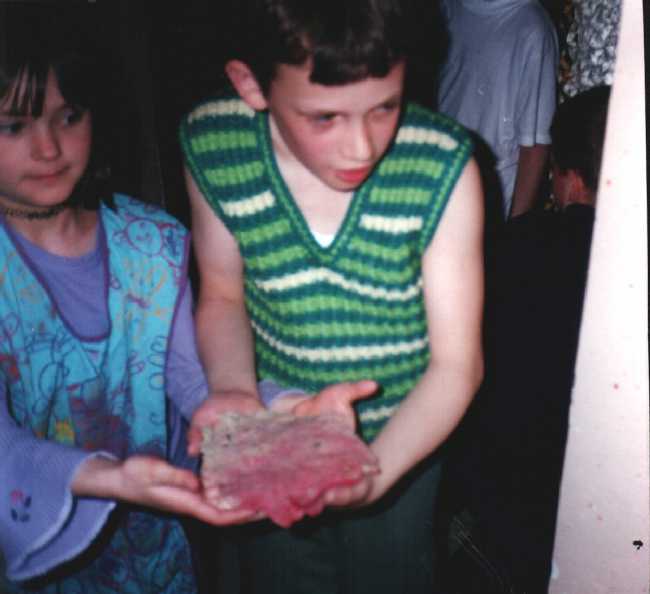
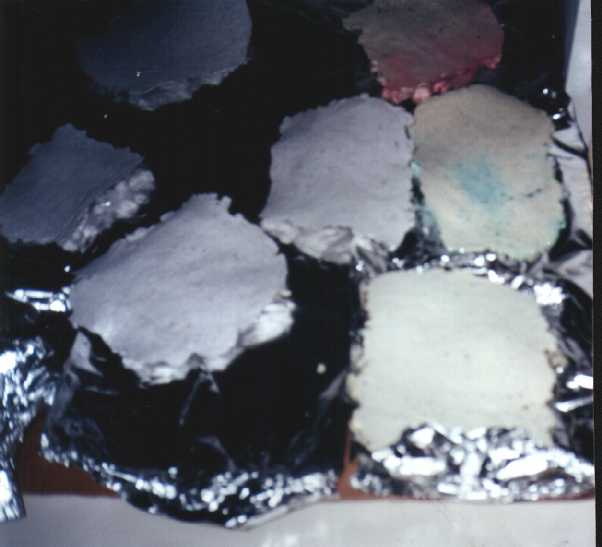
6. Finally we put the layer of paper on the foil where it dried well.
c) CREATING DUSTBINS
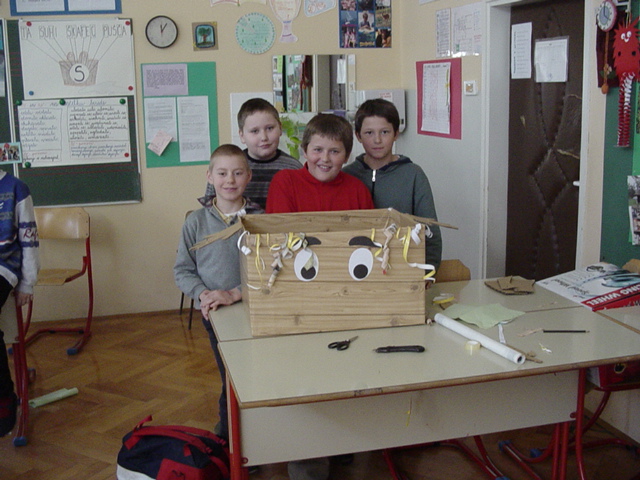
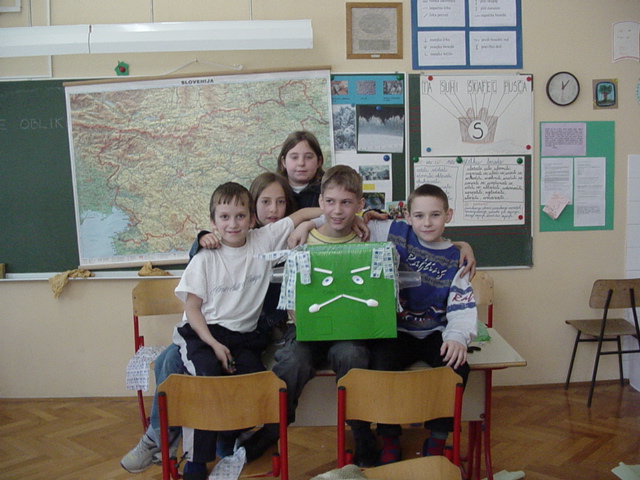
We are likable, aren't we?....................................................................................Five ''paper'' friends
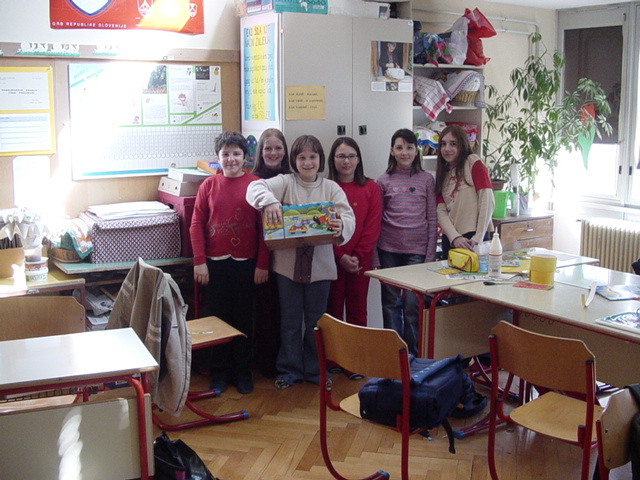
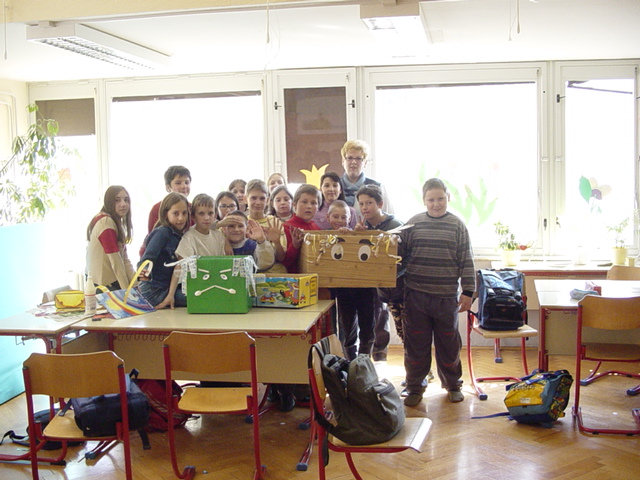
What have the girls got in the box?.........................................................................Imitating EKO boys and girls is not prohibited.
d) ARRANGING FLOWER BEDS AND THE
SURROUNDING
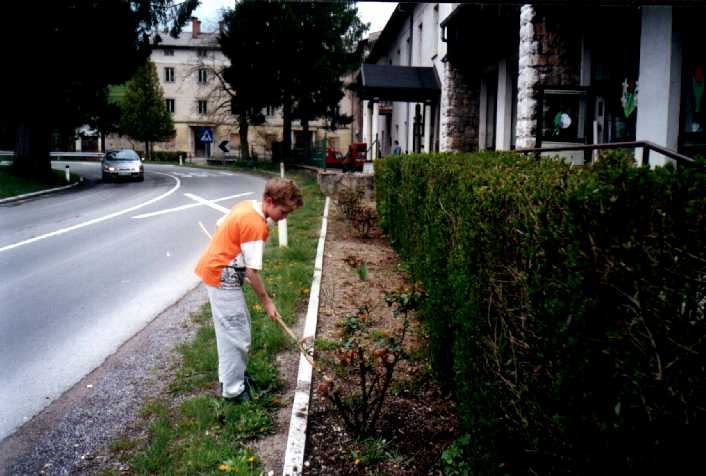
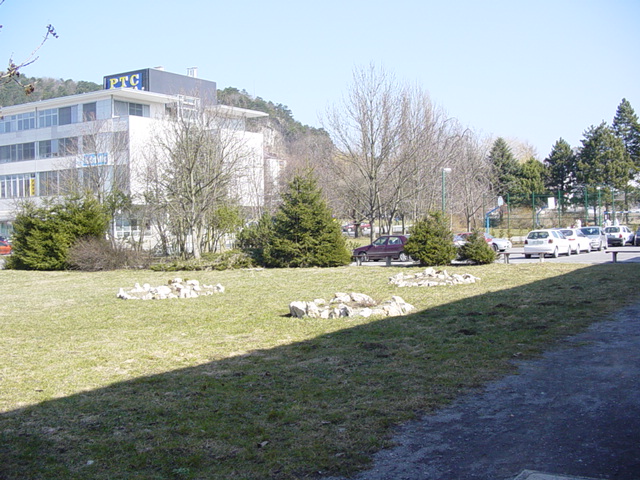
Do I have to do it all by myself? ..........................................................................Three garden islands in front of the school – in winter.
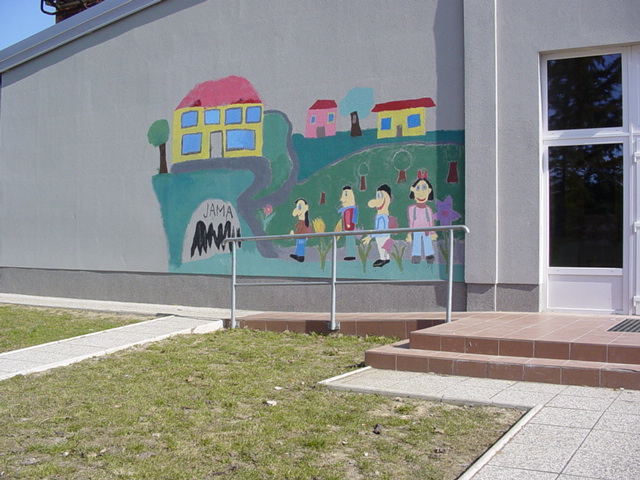
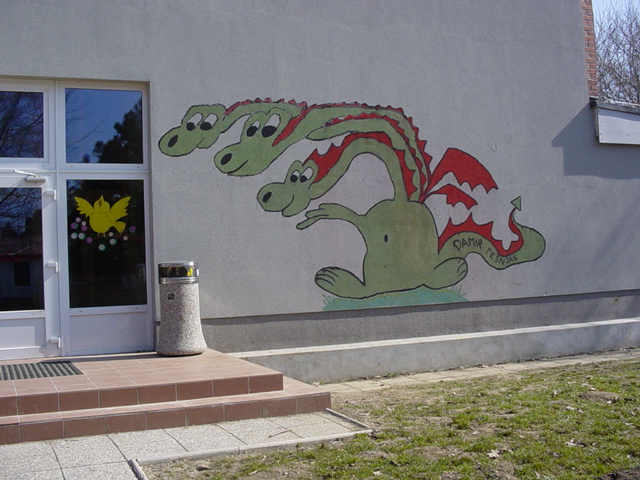
We are going to visit ''the human fish'' (Proteus Anguinus).....................................Psst! The dust bin is telling us a story for the third time.
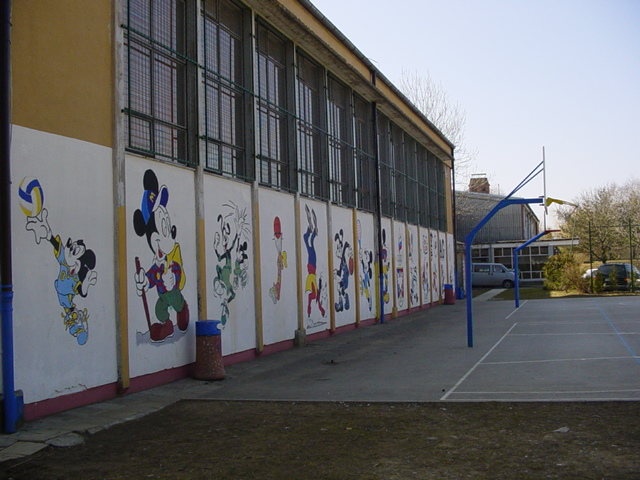
We are always the first.
e) OTHER
ACTIVITIES
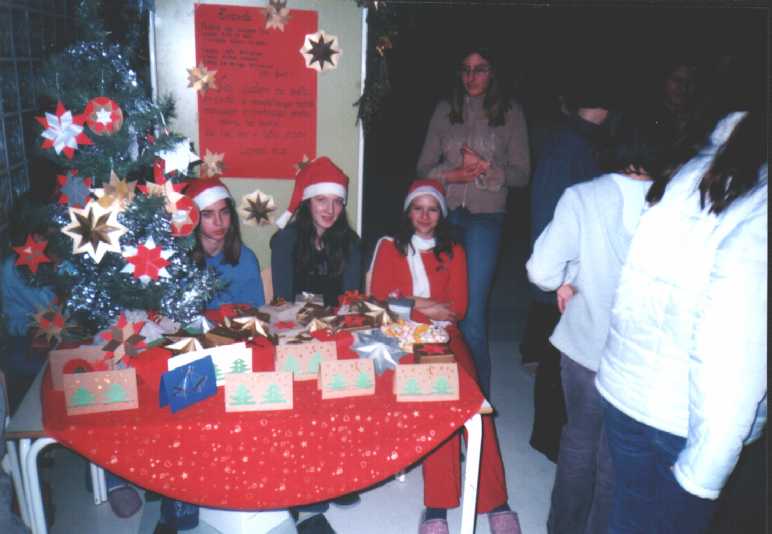
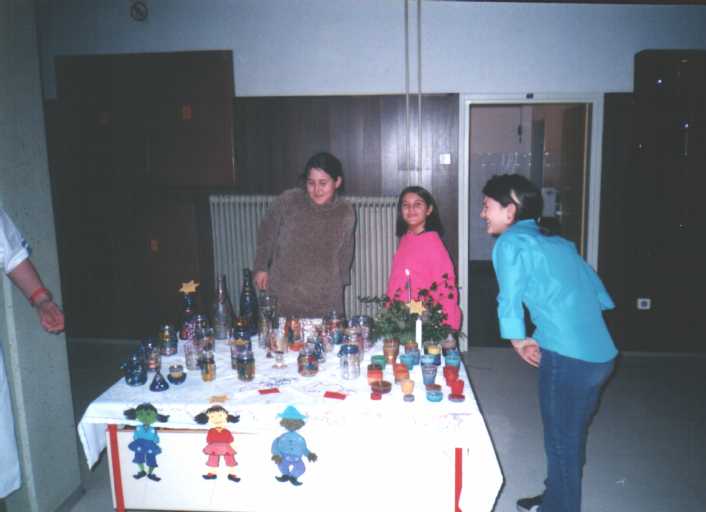
Three Christmas beauties...................................................................................Would you like to drink from these glasses?
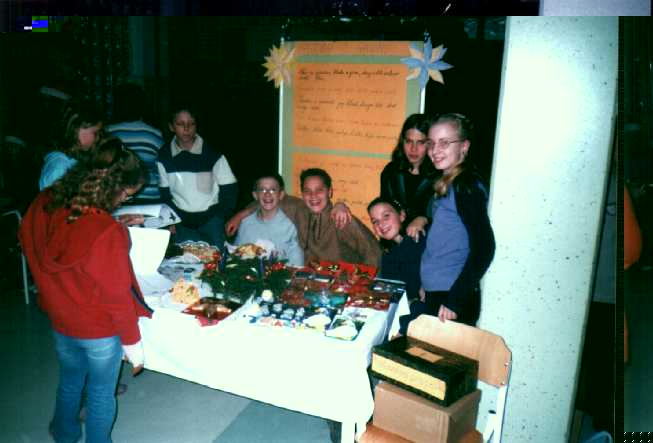
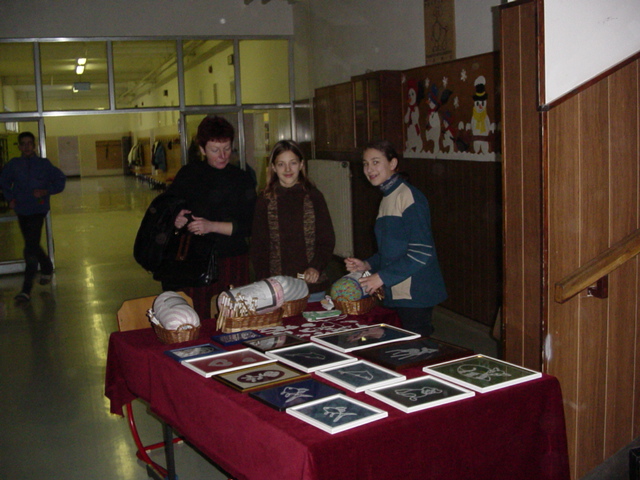
We like each other.............................................................................................It's easy but you have to be very precise.
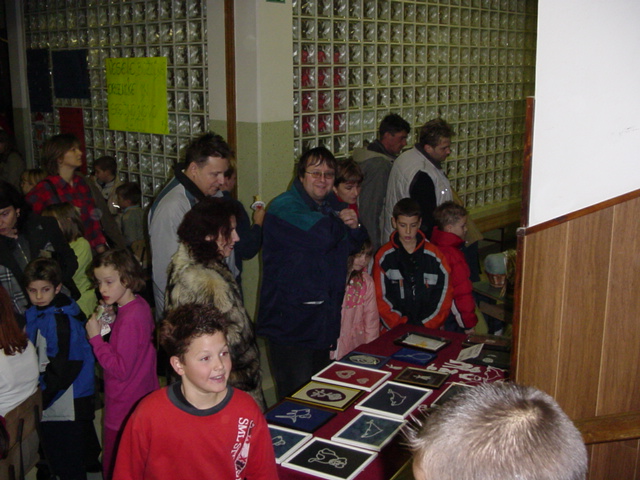
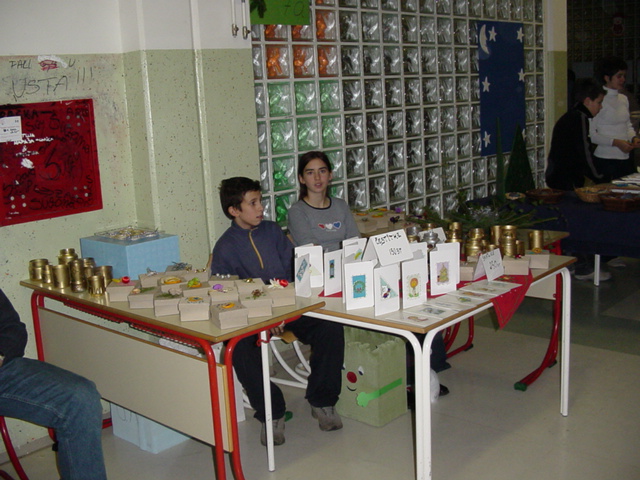
I would like to buy one.....................................................................................Buy now!
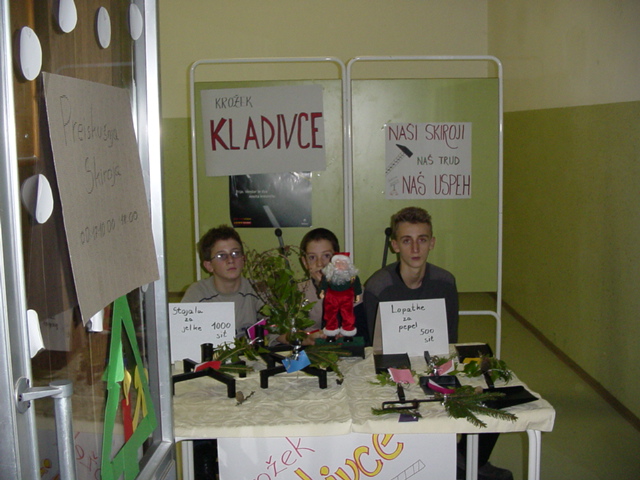
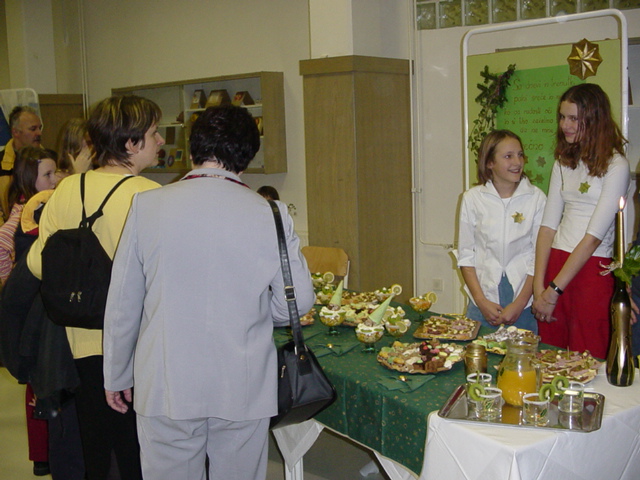
Our scooters, our efforts, our success...............................................................Can we help you?
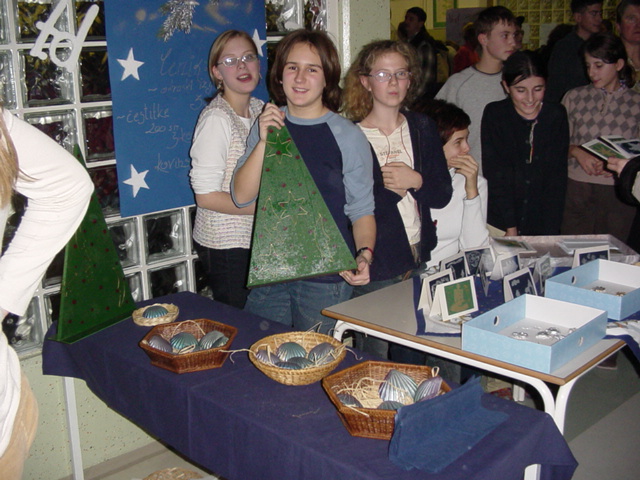
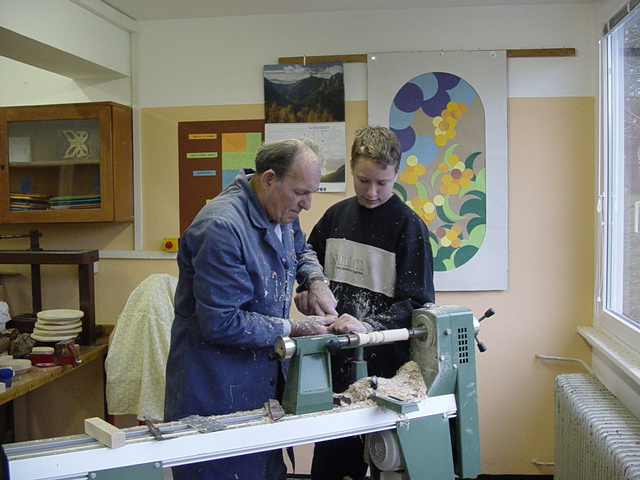
EKO Christmas trees..........................................................................................Who's the master here?
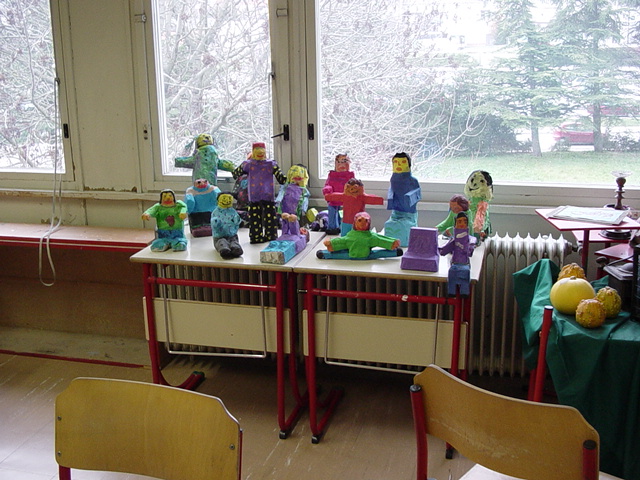
We won't stay still any more, we are going to play with you.