|
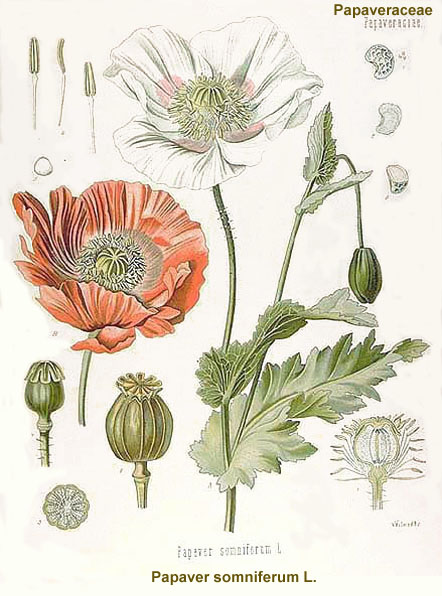
Opium is a plant product derived from the sap inside of the opium poppy's seedpod. This poppy (papaver somniferum) grows in dry, warm climates, especially in the mountains stretching from Turkey through Central and South Asia all the way to Laos. It is increasingly being grown in South America, as well. The sap of the poppy, which is milky and opaque inside of the pod, turns thick and brown-black in color as it seeps out, after the pod has been sliced open by harvesters. This thick sap is then collected in bricks or balls and enters the black market. Opium in this raw form can be smoked or taken orally, but not injected, since it is still full of fungi and bacteria. The opium can be further processed and purified to become a range of drugs, legal and illegal, including morphine, heroin, codeine, and thebaine. The human brain already has receptors for the opiate drugs, because their chemical structures are quite similar to the endorphins the brain produces itself. Sometimes called "feel-good chemicals," these endorphins are released when we experience pain or stress. They flood the space between neurons (nerve cells), preventing them from flowing back and forth, thus reducing the experience of pain. The opiates work similarly, creating a sort of euphoria. The effects of smoking opium are almost identical to the effects of using heroin or morphine. They include a relaxed feeling, relief from pain and anxiety, decreased alertness, respiratory depression (slowed breathing), impaired coordination, constricted pupils, nausea, and constipation. These effects can last from three to six hours. Over a period of prolonged usage, an individual can become dependent on opium. This happens because the brain adapts its circuitry to the continued presence of the drug. The user also develops tolerance, where continuously larger doses are needed to provide the same effects. If the drug use is then stopped, the neurons, which had been inhibited, flow freely again, and a chemical imbalance results. This turns into withdrawal, which can begin 8 to 12 hours after the last use. It starts with tears in the eyes and flu-like symptoms, including nausea, cramps, fever, weakness, depression, and diarrhea. Muscle spasms and feelings of anxiety can then develop. The entire process usually lasts 7 to 10 days. The possibility of overdosing on opium, or opium products, is always real, and can involve some serious complications, including slow, shallow breathing, clammy skin, a rapid pulse, circulatory collapse, and convulsions. In the worst cases, coma and even death may result from respiratory failure.
|