MIDDLE AGES
Branko KermanThe establishing of the Zagreb diocese in
1094 brought Prekmurje under the wing of the Hungarian Crown. The Hungarian kings granted
the land to their vassals. This was the origin of the first feudal families; castles
became the administrative centres of estates and also the centres of commercial and
cultural development. Around them, hamlets, villages and market towns grew up and various
crafts and trades developed. Blacksmithery and forging were both important activities. In
Grad na Goričkem a late medieval smithy and foundry have been discovered (see
reconstruction of smithy and foundry). Important finds include a melting-pot, a key, a
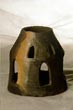
padlock, arrows, a table lamp with Gothic niche ornaments, and a goblet with a seal
ornament featuring inverted triangles.
 |
 |
|
Lamp, Grad, 15th century |
The archaeological objects in the exhibition which were obtained from
protected digs at castles, burial grounds, etc., are just a tiny fragment to help us
towards an understanding of the Middle Ages and later periods in Prekmurje. Particularly
interesting are axes and metal parts of clothing (belts buckles, buttons, horseshoes, a
necklace, brooches, etc.).
Important crafts included pottery
and stove-making. Many of the ceramic pots were obtained from various protected
archaeological digs. A rubbish pit yielded a variety of damaged and useless objects which
tell us much about the way of life of the period (tiles, glass, pieces of pottery, animal
bones, etc.); this can be seen from the reconstruction of a rubbish pit of this type. |