|
 | The
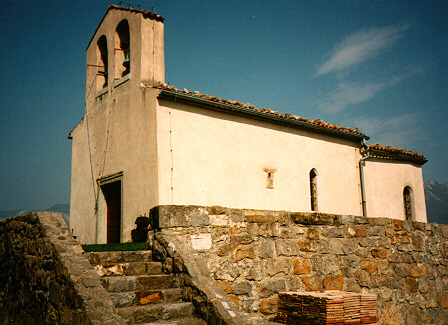
church stands on the top of the hill 147 meters (447 feet) above sea level.
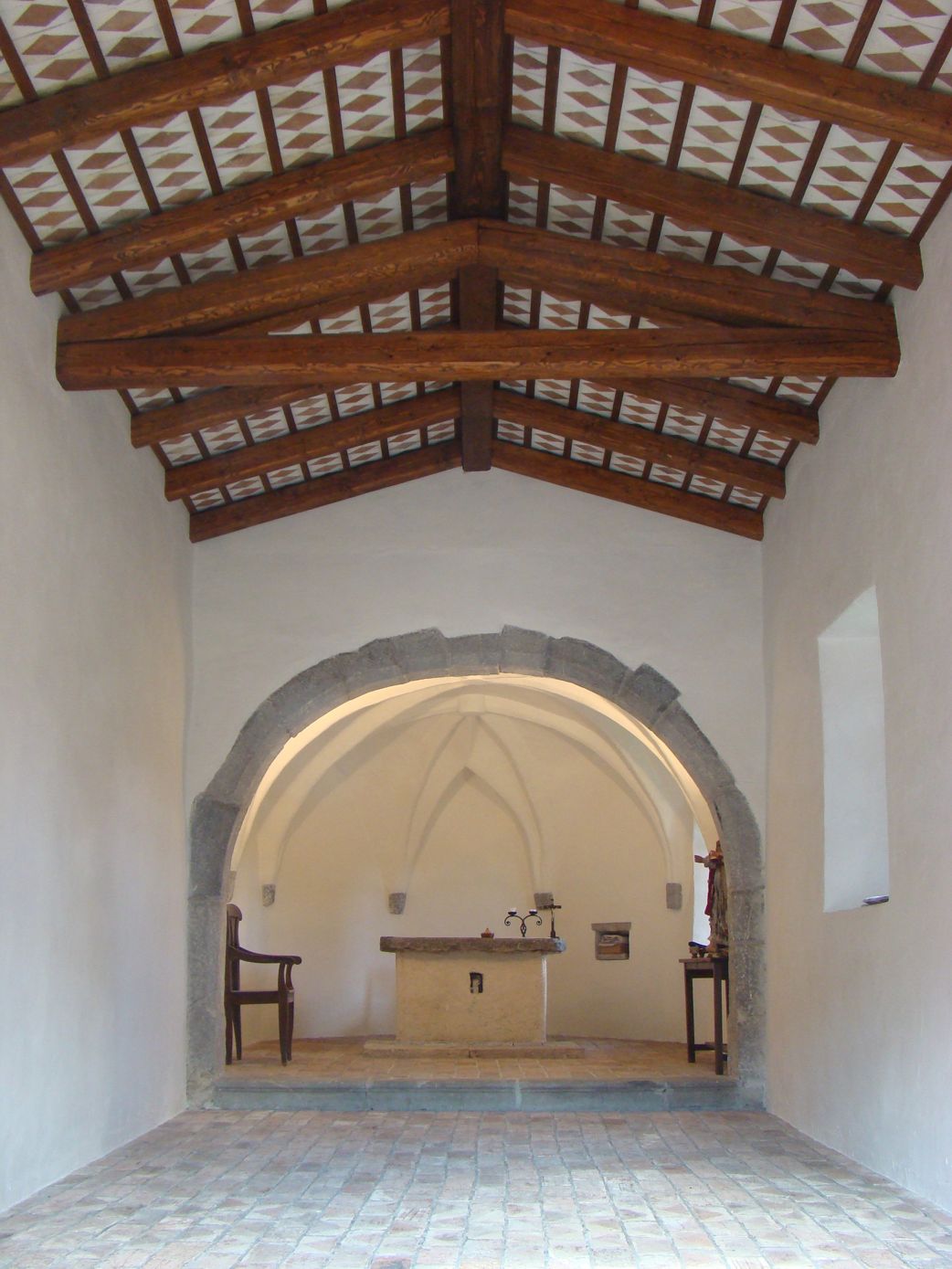
The building is of simple construction and is square in shape. On the portale
there is an inscription which shows the age of the church:
A skillfully crafted stone in the eastern wall carries the date:
The church has gone through turbulent times. A few years ago the church
renovation (administred by priests M. Hrvatin and J. Berce and supervised
by the artist S. Fakuc) was completed. During the church reconstruction
the remains of a watch tower were discovered under the wall plaster. In
the past the church was probably a part of a watch tower. In present day
the embrasure of the tower can be seen in the south wall of the church. |
|
 | The
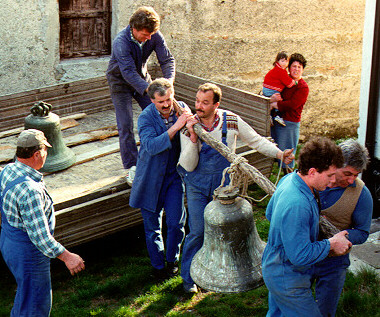
two bells hanging on the church belfry bear witness to the turbulent
history.
The smaller carries the date 1716 and the latin inscription: ECCE CRVCEM
DOMINE F VGITE PARTES ADVERS (Look, Cross of the Lord, hostile forces
- go away!). The bigger dates from 1916 and carries the inscription: A
FULGURE ET TEMPESTATE LIBERA NOS DOMINE (From thunders and bed weather
- save us, oh Lord!). People used to ring the bells when a thunderstorm
was approaching. Rope's traces, cut deep into the stone, are still visible
on the portal.
The tuning of the two bells is inique: the larger bell is tuned to "C", whereas the smaller to the sound "F - major". In music theory this musical combination is called "TRITONUS" (the enlarged quart) or "DIABOLIS IN MUSICA" due to its harsh sound produced. Many emergency vehicles have sirens with the same sound. After World War Two the bells of St. John's church were transported to the parish church of St. Justus. The bells of St. Justus had been removed during the war by the Italian fascists. Ironically enough, during this 50-year "bell-less" period of St. John´s, the church was struck and damaged by lightning several times. Recently the church and the walls around it have been restored and in 1991 even the "DIABOLIS IN MUSICA" returned to the church belfry. |